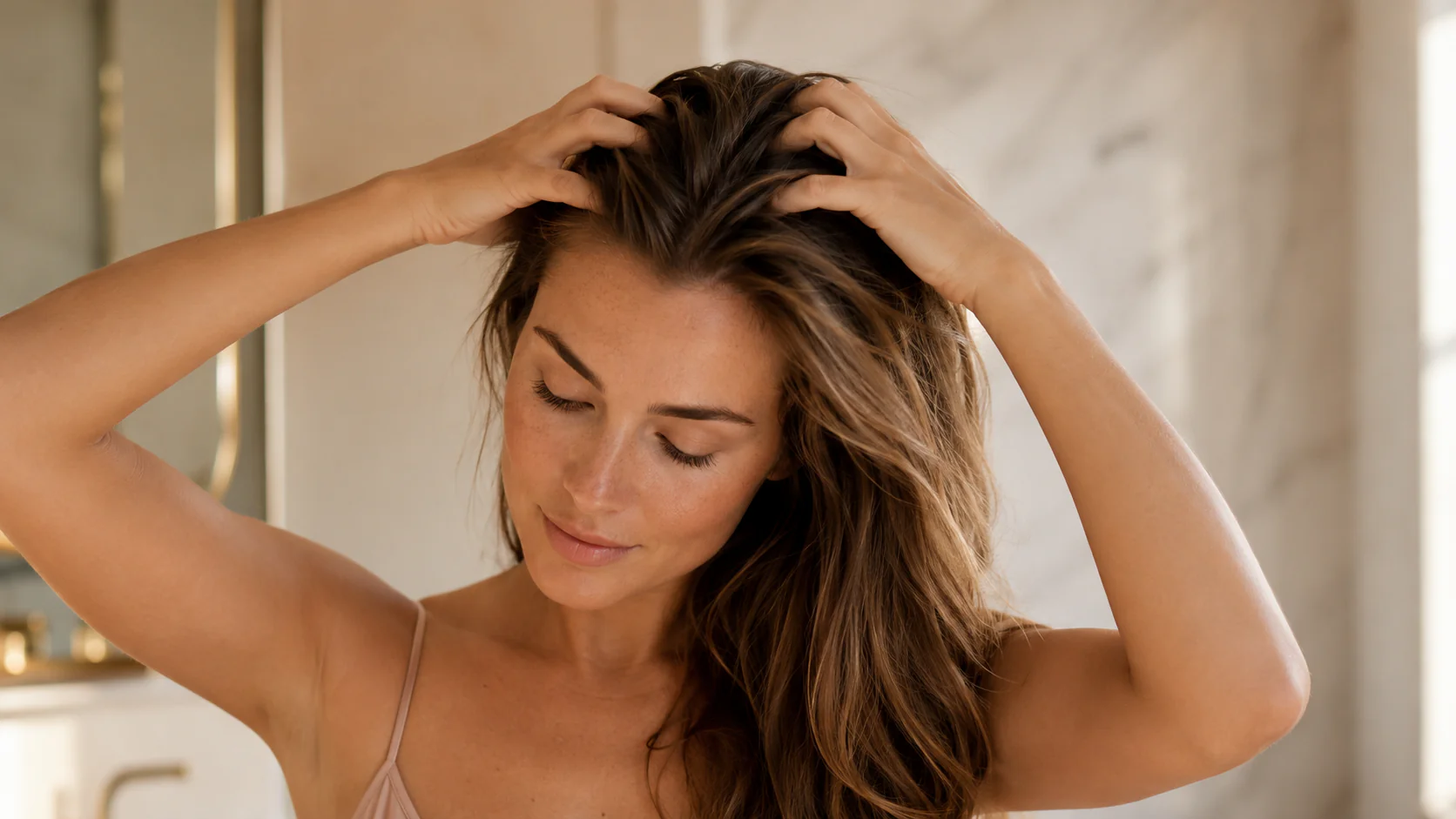
Scalp care: Why healthy hair starts at the root
Shiny, strong hair isn't achieved through elaborate styling – it starts at the scalp. Caring for the roots leads to more beautiful hair in the long run. Here you'll learn what your scalp truly needs and what a simple, effective routine looks like.
If you prefer listening to reading
A concise overview: What puts a strain on your scalp, which signs you should take seriously – and what the right care routine looks like.
Optional: Show transcript
Hello and welcome.
If you're wondering why your hair isn't growing the way you want it to – looks thinner, gets greasy quickly, or you're constantly battling itching or dandruff – then this audio guide is for you.
Because the answer to all of this usually isn't the length of your hair, the wrong styling product, or simply that you "just have bad hair." The answer lies in your scalp.
Why the scalp is so crucial
A hair you see and touch is biologically dead. It's a protein structure – keratin. What makes it grow long, strong, shiny, and healthy isn't determined at the tip, but at the root, in the hair follicle.
The scalp has around 100,000 such follicles. Each one is supplied with nutrients via the bloodstream. And each one reacts to its surrounding environment: the pH value of the scalp, sebum, products, hormonal fluctuations, and stress.
When the scalp is balanced, hair grows well. If it is stressed – due to improper care, dryness, inflammation, or an imbalance of sebum – this will become noticeable sooner or later in the hair itself.
What throws the scalp off balance
Harsh shampoo is one of the most common causes of scalp problems. Many shampoos contain strong surfactants – sulfates – which severely strip the scalp of its natural oils. The sebaceous glands compensate for this loss by producing more sebum. The roots become oily more quickly, you wash your hair more often, the scalp produces even more sebum – a vicious cycle.
Washing too frequently only exacerbates the problem. Washing daily doesn't give the scalp time to stabilize.
Heated air in winter and air conditioning in summer dry out the scalp – resulting in tightness, fine flakes, or itching. Stress and nutrient deficiencies also play a role. What's lacking in the blood – iron, biotin, zinc, proteins – becomes apparent in hair quality over weeks and months.
What the right routine looks like
The most effective way to start is with a mild shampoo that suits your scalp's condition. For sensitive scalps prone to dandruff, KEV Derma Regulate Shampoo is ideal – it gently cleanses, regulates sebum, and soothes at the same time.
Then the washing schedule: gradually increase to 3 to 4 times per week. Your hair may appear a little oilier for the first two weeks – that's normal. And wash with lukewarm water: hot water irritates the scalp and stimulates sebum production. Rinsing with cold water at the end closes the hair cuticle.
The scalp serum
Beneganic Intensive Hair Serum is applied directly to the scalp – not to the lengths – and acts as a leave-in conditioner. The formula contains peptides, caffeine, niacinamide, aloe, and panthenol. It's lightweight and absorbs quickly. Ideal for use in the morning or directly after washing on damp scalp – massage in for two minutes, and you're done.
And what about the inside?
Biotin supports keratin metabolism. Zinc regulates sebum production. Iron is necessary for oxygen transport in the blood – and thus for supplying the hair follicles. Proteins form the basis, as hair is 95 percent keratin. The Beneganic line offers tailored nutritional supplements – for women from 18, for women from 45, and for men.
Three things you can do right now
First: Take a look at your shampoo. Is it really mild enough? If you feel tightness or itching after washing, probably not.
Secondly: Reduce how often you wash your hair. Give your scalp a chance to regulate itself.
Thirdly: Consider a scalp serum – as a targeted step for the hair roots. Two minutes a day will have a noticeable effect for weeks and months.
Healthy hair doesn't start at the styling station. It starts at the root. Thanks for listening – and see you next time.
Many people focus on the lengths of their hair when caring for it – but the lengths are what really matter. scalp,How the hair grows back, how strong it is, and how long it stays healthy. The good news: Scalp care isn't a complicated extra, but a clear routine – and the difference is often noticeable within a few weeks.

The scalp is not a floor – it is active skin.
The scalp is real skin – with sebaceous glands, blood vessels, nerve endings, and around 100,000 hair follicles. Each individual follicle supplies a hair with nutrients from the blood. If this follicle is stressed by product residue, inflammation, or an imbalance, the hair grows poorly, becomes thinner, or falls out earlier.
The natural pH value of the scalp lies between 4.5 and 5.5 – slightly acidic. This acid mantle protects against unwanted bacteria and keeps the scalp balanced. Harsh shampoos, frequent washing, or unsuitable products can disrupt this balance – with noticeable consequences: itching, dandruff, oily roots, or dry, tight skin.
The scalp is the foundation – not the hair itself. Anyone who wants strong, shiny hair in the long term should start their hair care not at the ends, but at the roots.
A hair that has already grown out of the follicle is biologically dead. Everything that keeps it beautiful, shiny, and strong is already determined at this stage. on the scalp.
What throws the scalp off balance
Many causes of an irritated scalp are subtle – and often have less to do with bad genes than with specific care or lifestyle habits. Here's an overview of the most common contributing factors:
Too harsh a shampoo
Sulfate-rich shampoos severely strip the scalp of its natural oils. As a reaction, the sebaceous glands produce more sebum – the roots become greasy faster, even with more frequent washing. A mild, pH-neutral formula is more stable.
Washing too often
Washing your scalp daily doesn't give it time to regenerate. The natural sebum balance is disrupted. For most hair types, washing your hair 2-3 times a week is more beneficial.
Heating air & air conditioning
Dry air in winter or in air-conditioned rooms deprives the scalp of moisture. This can result in a feeling of tightness, fine flakes, and itchy patches.
Stress & nutrient deficiency
The hair root is supplied via the bloodstream. Chronic stress, a poor diet, or a deficiency in biotin, zinc, or iron can directly affect hair quality and growth.
These are the signals your scalp sends you
The scalp communicates – you just need to know what the signals mean. The most common complaints and their likely causes:
- White, dry scales: Most often it's dryness or a disturbed pH value – frequently caused by aggressive shampoos or heated air.
- Yellowish, greasy scales: These symptoms can indicate an overproduction of sebum, and in some cases, mild fungal activity (e.g., seborrheic dermatitis). Consult a dermatologist if symptoms persist.
- Itching without visible scales: Often a contact reaction to ingredients or perfume in personal care products.
- Quickly greasy roots: Indication of overactive sebaceous glands – often as a reaction to washing too frequently or using too aggressive a shampoo.
- Increased hair loss: This can be normal seasonally (especially in autumn), but persistent failure should be investigated.
Persistent scalp problems – inflammation, severe itching, hair loss lasting several months – require a visit to a dermatologist. Skincare can support the scalp's balance, but it does not replace a medical diagnosis.
The right scalp care: step by step
A good scalp care routine doesn't have to be complicated. It requires a mild shampoo that suits your scalp's condition and the right washing frequency. That's the most effective way to start.
Choosing the right shampoo: Mild, pH-neutral, without harsh sulfates. For sensitive scalps or those prone to dandruff: a specially formulated shampoo like this one. KEV Derma Regulate Shampoo. It cleans thoroughly and soothes at the same time.
Reduce washing frequency: Those who wash their hair daily should gradually reduce the frequency to 3-4 times per week. The scalp needs time to regulate itself. It may appear slightly oilier for the first two weeks – this will subside.
Wash in lukewarm water: Hot water irritates the scalp and promotes sebum production. Rinsing with lukewarm to cold water is ideal – this closes the hair cuticle and reduces frizz.
Apply scalp serum: A targeted serum, applied directly to the scalp, can noticeably improve hydration and follicle condition. Non-greasy, no rinsing required – simply work it in.
Incorporate scalp massage: Two to three minutes of circular motions while washing – this promotes blood circulation and thus the transport of nutrients to the hair follicles. Simple and effective.
Support from within: The scalp benefits from a balanced supply of proteins, biotin, zinc, and iron. Dietary supplements can complement—but not replace—what a healthy diet should provide.
When washing, first lather the shampoo in your hands and then gently massage it into your scalp – do not rub it into the lengths of your hair. This way it works precisely where it is needed.
Derma Regulate – specially formulated for sensitive and irritated scalps
The Derma Regulate line The products from the KEV shop have been specially developed for people struggling with dandruff, itching, oily scalp, or minor inflammation. The products are designed to work together and clarify the scalp without drying it out.
Derma Regulate Scalp Trio
The complete starter set for scalp care: Derma Regulate Shampoo (200 ml), Derma Soothing Stimulant (100 ml) and Derma Tonic (100 ml). Perfectly coordinated for a calm, balanced scalp.
The trio is available in the shopKEV 04 Derma Regulate Shampoo
Mild shampoo for sensitive scalps prone to dandruff. With salicylic acid and zinc – soothes, regulates sebum and gently cleanses the scalp without drying it out.
Go to shampoo in the shopBeneganic Intensive Hair Serum – Care directly at the follicle
The Beneganic Intensive Hair Serum This is a research-based, water-based leave-in scalp serum that is applied directly to the scalp – not to the lengths. It makes hair appear visibly fuller and stronger and supports a balanced, well-hydrated scalp.
The formula contains Peptides and caffeine in a water-based system as well Niacinamide, Aloe and Panthenol, These ingredients support moisture and strengthen the skin barrier. The light, non-greasy texture absorbs quickly – ideal as a daily ritual or as a complement to your existing skincare routine.
- Apply to dry or slightly damp scalp.
- Gently massage into the scalp with your fingertips.
- Do not rinse – it acts as a leave-in conditioner.
- Ideal for use in the morning or directly after washing on the still damp scalp.
Beneganic Intensive Hair Serum
Study-based active ingredient combination for a balanced, well-hydrated scalp. Light, non-greasy, suitable for daily use – as a daily ritual or targeted intensive routine.
See the serum in the shopInner care: What the scalp gets from the blood
Hair roots are supplied with nutrients exclusively via the bloodstream. What you eat – or what you lack – has a direct impact on hair growth and scalp health.
- Biotin (Vitamin B7): Supports keratin metabolism and contributes to normal hair structure.
- Zinc: It regulates sebum production and supports hair growth. A zinc deficiency often manifests as increased hair loss.
- Iron: Necessary for oxygen transport in the blood – and thus for the supply of hair follicles.
- Proteins: Hair consists of approximately 95% keratin, a protein. A protein-rich diet forms the basis for healthy hair.
- Omega-3 fatty acids: They support the skin barrier and can alleviate dryness of the scalp.
Those who want to specifically support their scalp and hair roots from within will find what they're looking for at Beneganic Tailored nutritional supplements – including those for women aged 18 and over, those aged 45 and over, and for men. These are not intended as a substitute for a balanced diet, but can be used to specifically supplement a diet if certain nutrients are lacking.
Your scalp care plan: simple & suitable for everyday use
You don't need a complicated multi-step routine. This simple plan covers the essentials – and can be consistently implemented in everyday life.
Daily (optional): Apply scalp serum to dry scalp. Gently massage in – 2 minutes is sufficient. The effect builds up over time.
2-3 times per week: Use a mild shampoo and wash with lukewarm water. Incorporate a scalp massage while lathering. Rinse with cold water.
Monthly: Quick check: What is the condition of your scalp? Is there itching, new dandruff, or changes in hair loss? Adjust the product if necessary.
In the long term: Monitor your diet, reduce stress, and drink enough water. What the body lacks will sooner or later show on the scalp.
FAQ – Frequently Asked Questions about Scalp Care
A common cause is that the shampoo dries out the scalp or contains fragrances that trigger a reaction. Try switching to a mild, fragrance-free shampoo and reducing how often you wash your hair. If the itching persists, consult a dermatologist.
Daily washing can stimulate sebum production because the scalp compensates more quickly for the removed oil. Gradually reducing washing to 3-4 days per week helps to stabilize the balance. The adjustment period lasts 2-4 weeks – then the scalp usually regulates itself.
A scalp serum – like the Beneganic Intensive Hair Serum – is formulated for the scalp itself: light, non-greasy, and applied directly to the skin. A hair serum, on the other hand, is intended for the lengths and ends of the hair and often contains oils or silicones. They serve different purposes and should not be confused.
Yes – regular scalp massages have been proven to promote blood circulation and can improve the transport of nutrients to the hair follicles. Studies show that daily massages of about 4 minutes over several months can have a positive effect on hair density. It's simple, costs nothing, and can easily be integrated into your washing routine.
Hair grows an average of 1–1.5 cm per month. Improvements to the scalp itself—less itching, reduced dandruff—can become visible after just 2–4 weeks. Changes to hair structure take longer: 3–6 months is realistic.
Conclusion: Healthy hair doesn't start at the mirror – but at the root.
Supporting your scalp with the right routine, the right shampoo, and a targeted serum lays the foundation for hair that grows back stronger, shinier, and more resilient. And those who also pay attention to nourishing their scalp from within will enhance this effect in the long term.
If you are unsure which products are suitable for your scalp, or would like a personal assessment: We will be happy to help you at our salon in Berlin-Mitte.
Personal scalp consultation in the salon
Not sure what your scalp needs? We'll take a look together – and show you which routine and products are right for you.
You can find all the products from this post directly in the KEV Online Shop.Free shipping on orders over €50.