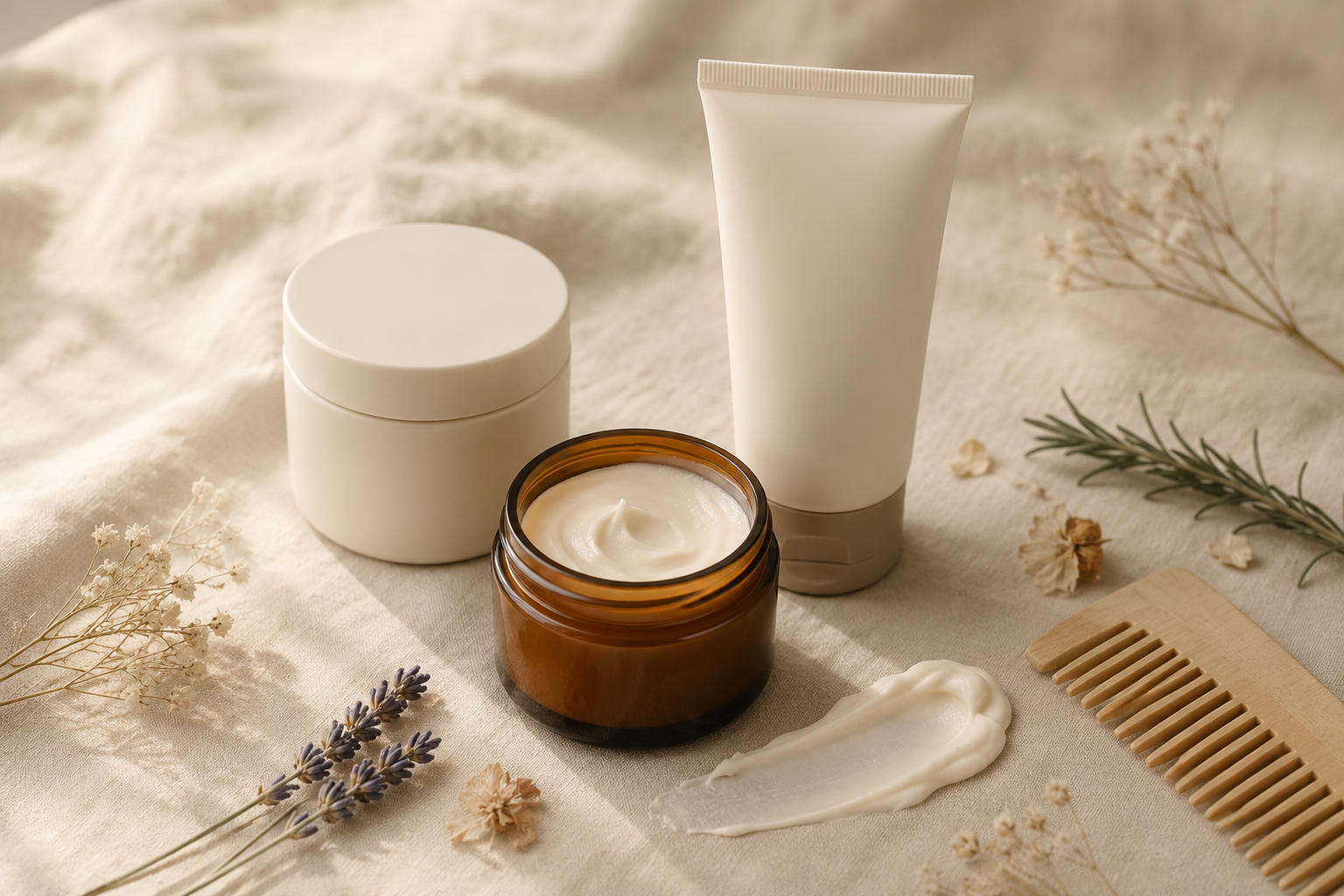
The right hair mask for your hair type – how to care for your hair in a targeted way
Not every hair mask is suitable for every hair type. Here you'll learn which mask is truly right for your hair type – and why choosing the right one makes all the difference.
If you prefer listening to reading
Quick overview: which hair mask suits which hair type – explained concisely in just a few minutes.
Show transcript
Transcript: Hello and welcome to our blog post. Today we're tackling a topic that concerns many: Which hair mask is actually right for my hair? A hair mask isn't a miracle cure that works the same for everyone. If you choose the wrong one, it can even weigh your hair down or render the treatment ineffective. The good news is: With the right overview, the choice isn't difficult at all. Fine hair needs a light mask that nourishes without weighing it down. A heavy, rich mask quickly makes fine hair limp and dull. Here, masks with a light texture and without heavy oils are ideal – like the Olaplex Weightless Nourishing Mask. Dry or damaged hair, on the other hand, needs real intensive care. Here, the mask can be richer and penetrate deeply. The Olaplex N°8 Bond Intense Moisture Mask or the Rich Hydration Mask were developed precisely for this purpose. Color-treated hair has special needs: The hair structure is altered, the color needs to be preserved, and the hair needs protection and moisture at the same time. The Color Save Mask C3 from System Professional is specially developed for color-treated hair. And if your hair is really stressed or damaged – for example, from frequent coloring, bleaching, or heat styling – then a repair mask is the right choice. The Repair Mask R3 works deep into the hair structure and strengthens the hair from within. Whatever your hair type, always apply the mask to the lengths and ends, not the roots. And it's better to treat your hair thoroughly once a week than to do a little bit every day. You can find more details, all product recommendations, and the correct application in the full blog post. Thanks for listening.
A hair mask is more than just an intensive conditioner. It can deliver moisture deep into the hair structure, repair damage from within, protect color, or add volume to fine hair. if it suits the hair type.If chosen incorrectly, it will have little or even be counterproductive. This overview shows you what really suits your hair.
What does a hair mask do – and how does it differ from a conditioner?
Conditioners and hair masks have a similar function, but different levels of effectiveness. A conditioner closes the hair cuticle after washing and provides immediate smoothness. A hair mask works longer and deeper: it can deliver moisture to the hair cortex, specifically address structural damage, or protect the color molecules in the hair.
In practical terms, this means: A hair mask doesn't replace conditioner – it complements it. Those who regularly and intensively care for their hair use both: conditioner after every wash, and a hair mask once a week or every two weeks.
Conditioner smooths – hair mask deeply nourishes. Both have their place in a good grooming routine.
Your quick hair type check – what kind of hair do you have?
Before you reach for the right mask, it's worth pausing for a moment. What hair type do you actually have? Here's a simple overview:
Fine or easily frizzy hair
Hair that quickly becomes limp after conditioning, lacks volume, or looks "greasy" with the smallest amount of product. Needs light conditioning without heavy ingredients.
Dry or damaged hair
Hair that feels rough, looks dull, or is difficult to comb. Often caused by heat, environmental factors, or lack of moisture. Requires intensive care.
Colored hair
Hair that has been dyed, bleached, or chemically treated. The hair structure is altered – moisture and color protection are especially important here.
Severely stressed or damaged hair
Hair with brittle ends, visible split ends, or a rough, porous surface needs targeted repair care from within – not a superficial coating.
Normal to slightly dry hair
Hair in good basic condition, but which still needs regular moisturizing care – especially in autumn and winter, when heating air and cold dry out the hair.
Many hair types are a combination: normal or oily roots, dry lengths. In this case, a hair mask is recommended. only in lengths and tips, not at the approach.
Fine hair: Care that provides support without weighing it down.
Fine hair needs care – but not heavy oils or creamy masks that weigh it down. The right mask for fine hair has a light texture, provides moisture, and supports natural volume.
For fine hair, less is often more. A light mask, used sparingly and rinsed thoroughly, is far more effective than a large amount of a rich formula.
Olaplex Weightless Nourishing Mask
A lightweight, nourishing hair mask specially formulated for fine, normal, or frizz-prone hair. It provides intensive care without weighing hair down – thanks to the renowned Olaplex Bond-Building Technology, which strengthens the hair structure from within. The result: increased manageability, visible shine, and no feeling of weight.
→ To the product- mask only from the lengths Apply – never at the roots
- Exposure time: 3–5 minutes is perfectly sufficient.
- Rinse thoroughly – product residue makes fine hair limp.
- Frequency: once a week or every two weeks
Dry or damaged hair: intensive moisture and repair
Dry hair lacks moisture – the hair cuticle often lies flat, the hair appears dull and is difficult to comb. In this case, the mask can be richer and contain intensive active ingredients.
Especially in autumn and winter – when heating dries out the air and hair is still stressed by UV radiation and salt water after summer – a good intensive mask is the most important step in the care routine.
OLAPLEX® N°8 Bond Intense Moisture Mask
Multifunctional moisturizing mask with patented Olaplex Bond-Building Technology. Repairs broken disulfide bonds in the hair, provides intense moisture, and instantly adds visible shine and manageability. For all hair types – especially effective on stressed, thin, or damaged hair.
→ To the productOlaplex Rich Hydration Mask
Intensive conditioning mask for dry, stressed, and dehydrated hair. Deeply moisturizes the hair structure, leaving it soft and improving its resilience. Ideal for hair regularly exposed to heat, environmental stressors, or chemical treatments.
→ To the productHydrate Mask H3
Intensive moisturizing hair mask from System Professional – specially developed for dry and stressed hair. Deeply moisturizes, restores elasticity, manageability, and shine. For normal to slightly dry hair.
→ To the product- mask in lengths and tips incorporate – never start at the beginning
- Processing time: 5–10 minutes, longer for very dry hair (with heat)
- Apply once a week, or twice a week for very dry hair.
- Afterwards, little or no conditioner is needed – the mask takes care of its job.
Colored hair: Color protection and structure in one
Dyeing or bleaching changes the hair structure. The hair cuticle is opened to allow color molecules to penetrate – afterwards, the hair is temporarily more porous and sensitive. A good hair mask for color-treated hair has two functions: to protect the color and to stabilize the hair structure.
Masks for color-treated hair should seal the hair cuticle (to prevent color molecules from washing out), restore moisture, and strengthen the hair structure from within. Sulfate-free shampoos and suitable masks work together to prolong the vibrancy of the color.
Color Save Mask C3
Intensive hair mask specially formulated for color-treated hair from System Professional. Protects color vibrancy, provides moisture, and strengthens the hair's keratin structure. Result: color stays vibrant longer, hair feels stronger.
→ To the productOLAPLEX® N°8 Bond Intense Moisture Mask
Olaplex Bond-Building Technology repairs broken chemical bonds in the hair – ideal even after coloring. It works at a molecular level and is suitable for all hair types, but especially after chemical treatments.
→ To the product- Use a color protection mask once a week
- After coloring, the mask as Immediate care apply
- No hot water – rinsing with lukewarm to cool water closes the cuticle layer.
- Combined with a sulfate-free shampoo, the color lasts significantly longer.
Severely damaged hair: targeted repair from within
If hair is truly damaged by frequent bleaching, chemical treatments, or persistent heat stress—brittle, porous, with visible split ends—simple moisture alone is not enough. What's needed is repair care that penetrates deep into the hair structure and rebuilds broken bonds.
Severely damaged hair doesn't need a surface coating – it needs care that strengthens the hair structure from within and makes it resilient again.
Repair Mask R3
A deep-acting repair and strengthening mask from System Professional for severely damaged hair. Visibly effective after just one application: it strengthens the hair structure, reduces breakage, and restores shine.
→ To the productSebastian Dark Oil Lightweight Mask
Deep conditioning mask for all hair types – with a blend of jojoba and argan oil. Provides intensive care, adds shine, and doesn't weigh down natural volume. Ideal as a supplement to your regular hair care routine or for moderate hair care needs.
→ To the productThe correct application: This is how the hair mask works best
The best hair mask is only as effective as how it's applied. These steps apply to all hair types and make the difference between a superficial coating and real results.
Wash hair: Rinse shampoo thoroughly before applying the mask. Shampoo residue can reduce the mask's effectiveness.
Pat dry with a towel: Lightly pat hair dry – do not rub it in. The mask absorbs well into slightly damp hair; it becomes too diluted in dripping wet hair.
Only in lengths and tips: mask never at the start Apply. The roots don't need extra care – too much product at the roots makes the hair weighed down and greasy.
Let absorb: 5–10 minutes is usually sufficient. For very dry or damaged hair: twist the hair; heat (e.g., a warm towel) helps the active ingredients penetrate.
Rinse thoroughly: Product residue weighs hair down and can cause itching. Lukewarm to cool water closes the hair cuticle, resulting in more shine.
Frequency: Once a week is ideal for most hair types. Very dry hair can benefit from twice a week, while fine hair is better off only every two weeks.
Common mistakes with hair masks – and how to avoid them
Apply mask to the roots
The most common mistake. The roots produce sebum and don't need extra care. Applying a mask to the roots quickly weighs the hair down, makes it greasy, and leaves it lacking volume.
Insufficient exposure time
Rinsing the mask out immediately will negate most of its benefits. The active ingredients need time to penetrate the hair structure – at least 5 minutes.
Wrong mask for your hair type
A rich mask on fine hair will make it limp. A mask that's too light on dry hair won't have any noticeable effect. The choice must be suited to your hair type.
Mask too infrequently or too often
Too infrequently: the hair doesn't get enough care. Too often, especially with fine hair: it quickly becomes weighed down. Once a week is the right rhythm for most people.
All hair masks from the shop – at a glance
In our shop you'll find a curated selection of professional hair masks for every hair type – from light conditioning masks for fine hair to intensive repair masks for severely damaged hair. All products are also used in our salon.
Olaplex – the complete product range
In addition to hair masks, the Olaplex line also offers shampoos, conditioners, and treatments that are designed to work together. See all products at a glance:
→ To the Olaplex CollectionFAQ – Frequently Asked Questions about the Hair Mask
Yes – that actually makes sense. On days when you use a face mask, use little or no conditioner afterwards, as the mask takes over that function. On days without a mask, use conditioner as usual.
For most masks, 5–10 minutes is sufficient. More intensive masks for very damaged hair can be left on longer – and are even more effective with gentle heat (e.g., a warm towel around the head).
With regular hair masks, this is usually unnecessary and can weigh down fine hair. If a mask is explicitly labeled as an overnight treatment, follow the package instructions.
The mask is coming exclusively in the lengths and tips – completely avoid this area. A medium-strength moisturizing mask or a light oil mask is ideal here.
Not necessarily – but professional masks from salons often have a higher concentration of active ingredients. More important than the price is the… The right choice for your hair type.
Conclusion: The right mask makes all the difference.
A hair mask is most effective when it suits your hair type, is applied correctly, and is regularly incorporated into your hair care routine. Fine hair needs lightness, dry hair needs intense moisture, color-treated hair needs color protection and structure, and damaged hair needs targeted repair. If you're unsure which mask is right for you, we're happy to help you personally.
Are you unsure which mask suits you best?
In the salon, we will look at your hair type together and recommend the right care routine – tailored to your hair, your everyday life and your budget.
✨ Book a consultation appointmentTip: You can also find all the recommended products directly in the Online shop – with detailed product descriptions and the option to ask questions via email.