Hair extensions done right:
Wefts, keratin bonds or CombLine?
Many women dream of longer or thicker hair, but the variety of methods can quickly become overwhelming, especially for beginners. This article explains clearly and understandably how... counters, Keratin bonds and CombLine Learn how different hair care products work, what their strengths and limitations are, and what kind of care is truly important. This way, you can find the solution that suits your hair, your daily routine, and your style.
Wefts
What are barbed wire?
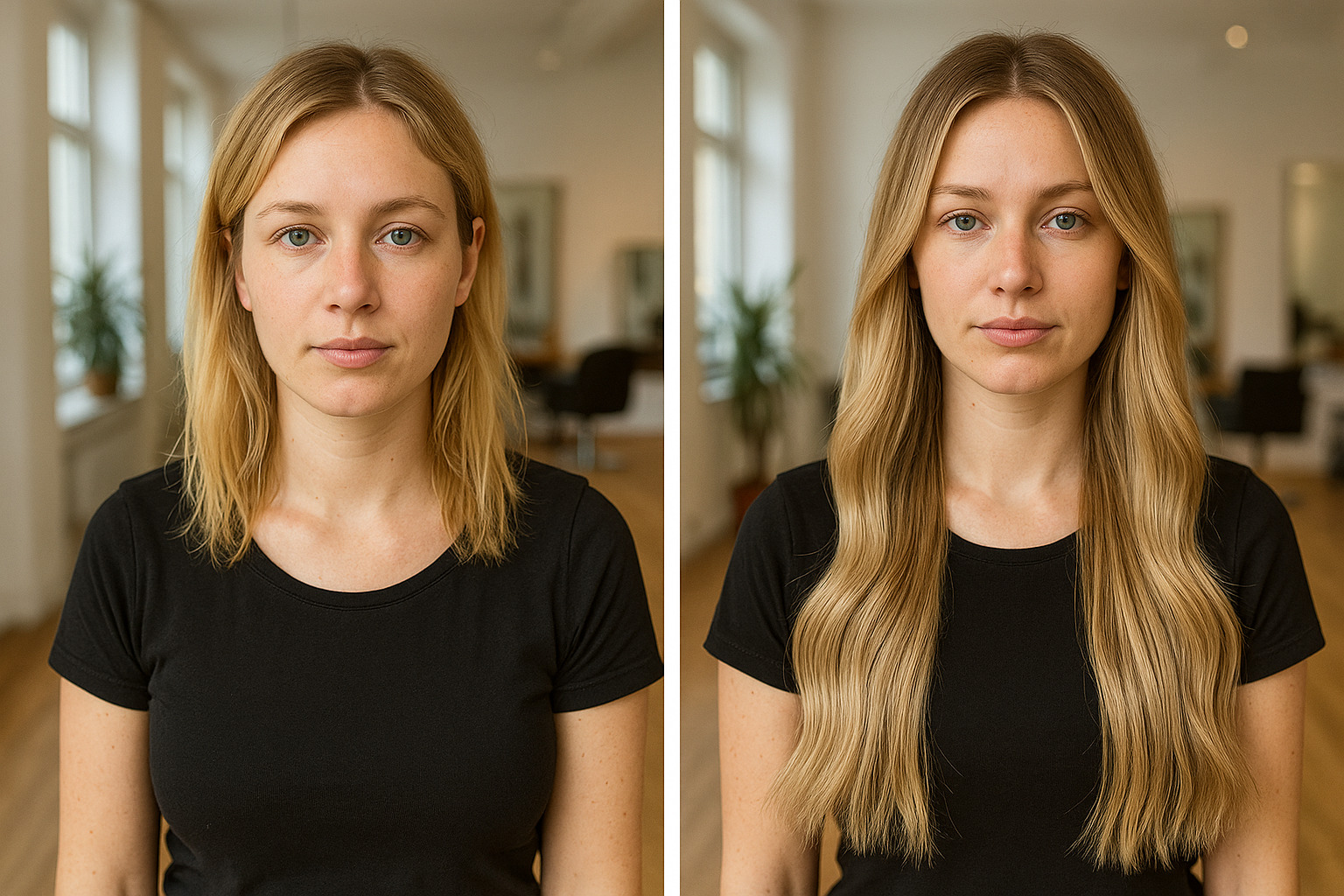
Hair wefts consist of many strands of hair sewn together into a band. These hairbands are attached to the head in one or more rows – often over sewn-in base braids or with small anchor points. This quickly creates a lot of volume with a natural fall.
Advantages
- Volume & natural look: A weft covers an area and blends harmoniously into the natural hair.
- Gently distributed: The weight is distributed across a row – less tensile stress on individual strands.
- Reusable: High-quality human hair wefts can be repositioned several times with proper care.
- Suitable for: normal to thick hair; desire for lots of volume
Disadvantages
- Regularly raising the level: Due to the arrival of new babies, plan for additional work every 4-6 weeks.
- Not ideal for very fine hair: The base may appear more visible otherwise; if necessary, choose a finer method.
- Care at the roots: Keep rows clean and dry thoroughly – this requires a little more effort when washing/styling.
Keratin bonds
What are bondings?
Here, individual strands of real hair are attached to the natural hair at the top using a strong keratin bond. The tiny bonds are barely visible in everyday life and move naturally with the hair.
Advantages
- Very natural look: Small, inconspicuous bonds under the top layer of hair.
- Long wearing time: With proper care, several months without a refit.
- Styling freedom: Straightening, curling, updoing – as usual, with some distance from the bondings.
- Suitable for: normal hair; desire for permanent extensions
Disadvantages
- Removal by a professional only: Removing the hair requires experience; strands are generally not reused.
- Costs & Time: Many individual steps are involved in the installation; consequently, the effort required is higher.
- Not ideal for very fine/damaged hair: Removing hair can put more strain on sensitive hair.
CombLine
What is CombLine?
CombLine is a very fine, modern method specifically for thin or fine hair. Using a comb applicator and flexible adhesive, individual extensions are attached directly to suitable strands of the natural hair – even in the top layer of hair or at the parting, making them virtually invisible.
Advantages
- Seamless & invisible: The bonds are barely visible – ideal for the top of the head/parting.
- Gentle & light: No hard bonding or rings; high wearing comfort.
- Precisely accurate: Compression/extension exactly where you need it.
- Suitable for: fine/thin hair; invisible thickening
Disadvantages
- Shorter intervals: Durability typically around 6–8 weeks; refit required.
- Reinsertion: Loose mini-strands are generally not reused.
- Specialized application: Requires skilled hands; availability is limited depending on the region.
Conclusion: Find the method that suits you.
Every technique has its strengths. counters They provide a lot of volume and can be increased in size. Keratin bonds They score points with a particularly natural look and long wearing time. CombLine It's the discreet solution for fine or thinning hair – ideal when seamless transitions are a priority. The best option depends on hair texture, lifestyle, and desired look.
The best way to discuss this is in person: We'll assess density, fall, and goals, and plan your extension/thickening realistically and gently – including a care plan.